UC Fieldwork : Australia's First Next Gen Illicit White Unearthed
Australia overhauled its cigarette laws last April, introducing filter warnings and mandatory health inserts in every pack. Less than a year later, the first compliant illicit white has surfaced.

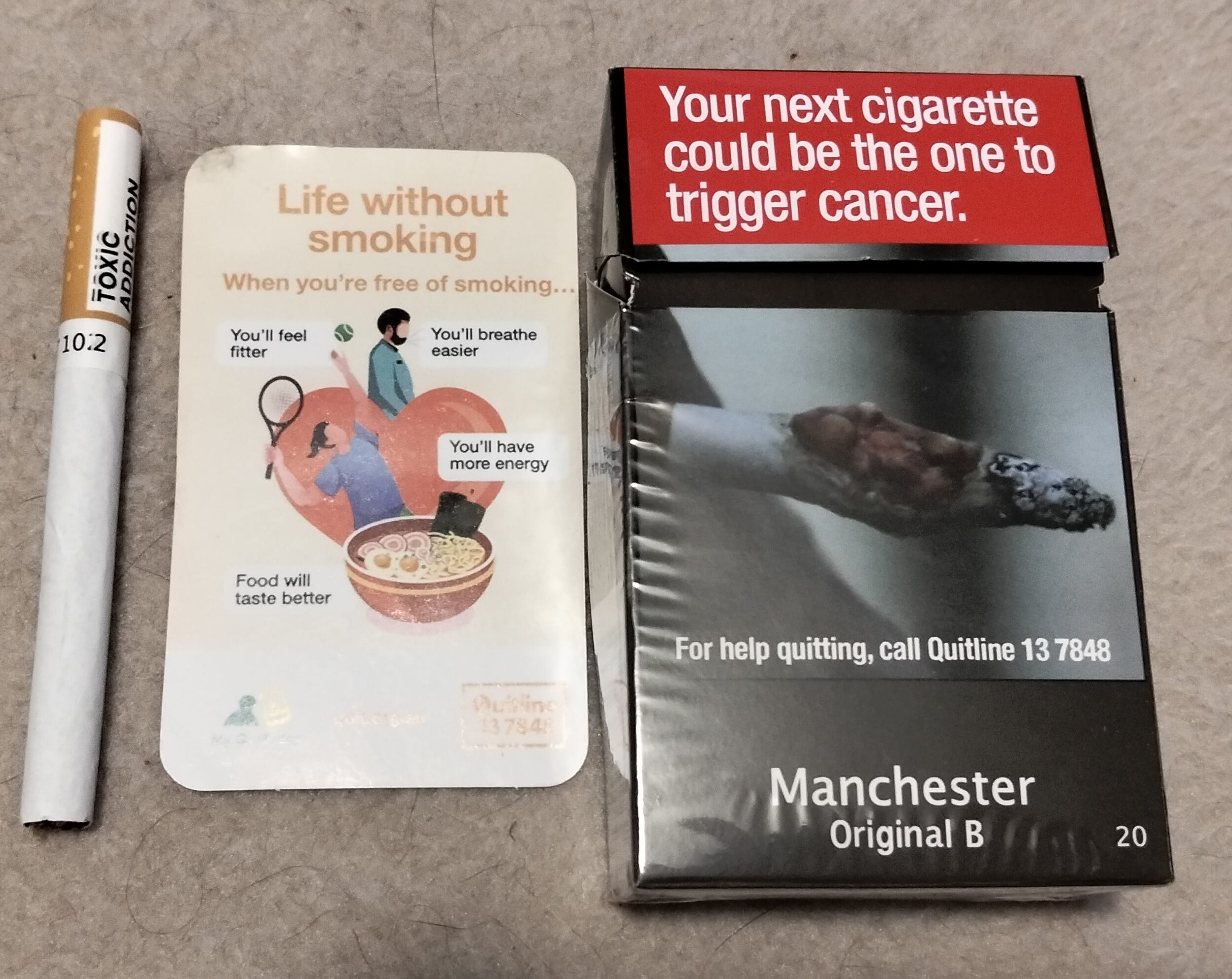
As if any further proof were needed that the parallel cigarette market can adapt faster than regulators can respond, this week I identified what appears to be Australia’s first fully next generation compliant illicit white cigarette.
New laws enacted last year tightened Australia’s rules for legal cigarette brands. The reforms outlawed menthol and other flavours, required health warnings to be printed directly on filters - mirroring Canada - and mandated a health information insert in every packet. Other changes updated plain pack warnings and graphics, restricted pack sizes to 20 cigarettes, and banned long or slim cigarette formats. Even colour based descriptors were prohibited.
Less than a year after these regulations came into force, the grey market has already produced its first fully compliant illicit white. Illicit whites are brands manufactured legally in one jurisdiction before being exported to another, typically without duty or excise paid. In practice, they are brands designed for smuggling and tax arbitrage.
The first brand to re‑engineer itself into this next‑generation format is Manchester. The brand is notorious on grey tobacco markets across the world, and it is estimated to be Australia - and the worlds - number one selling illicit cigarette brand.
Despite this, the brand enjoys virtually no legal distribution or promotion anywhere. Manchester has garnered impressive consumer and retailer brand recognition by sheer volume of sales, and a reputation for consistency.
I purchased a pack from a grey market retailer this week for A$10 (US$7). By comparison, the cheapest legal brands in Australia retail for around A$35 (US$24.50), with the vast majority of the price comprising tax. Australia is widely regarded as the most expensive legal cigarette market in the world.
This compliant variant represents a new challenge for authorities attempting to unwind Australia’s enormous illicit tobacco market. The black market is now so large that even the Illicit Tobacco and E‑cigarette (ITEC) Commissioner has stated that roughly one in two cigarettes consumed in the country is illicit.
Late last year, the Australian Tax Office (ATO) transferred responsibility for estimating the tax shortfall to the ITEC Commissioner - an acknowledgement that the problem had become politically untenable and beyond the ATO’s operational reach. A report by the national broadcaster, the ABC, this week suggested the ratio may now be closer to two illegal cigarettes for every legal one. Recent modelling commissioned by a major supermarket chain forecast that illicit tobacco could reach a 90 percent market share by 2029.
This reskinned Manchester variant is likely to make enforcement even more difficult. The fully compliant packaging allows the product to sit alongside legitimate stock without drawing attention. Manchester has effectively become a chameleon brand, and even a thorough search for contraband may fail to identify it.
In a further complication, the importer associated with this product is listed as holding a legal permit to import tobacco and cigarettes into Australia. Quay Tobacco Trading is named on the side of the packet as the importer, and a GS1 database search confirms that Quay Tobacco also registered the product’s barcode.
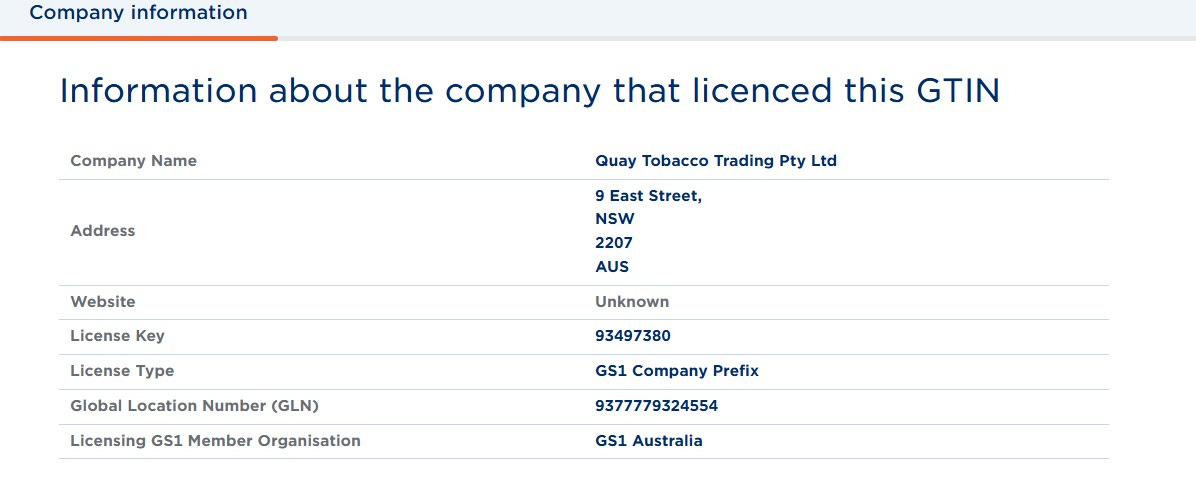
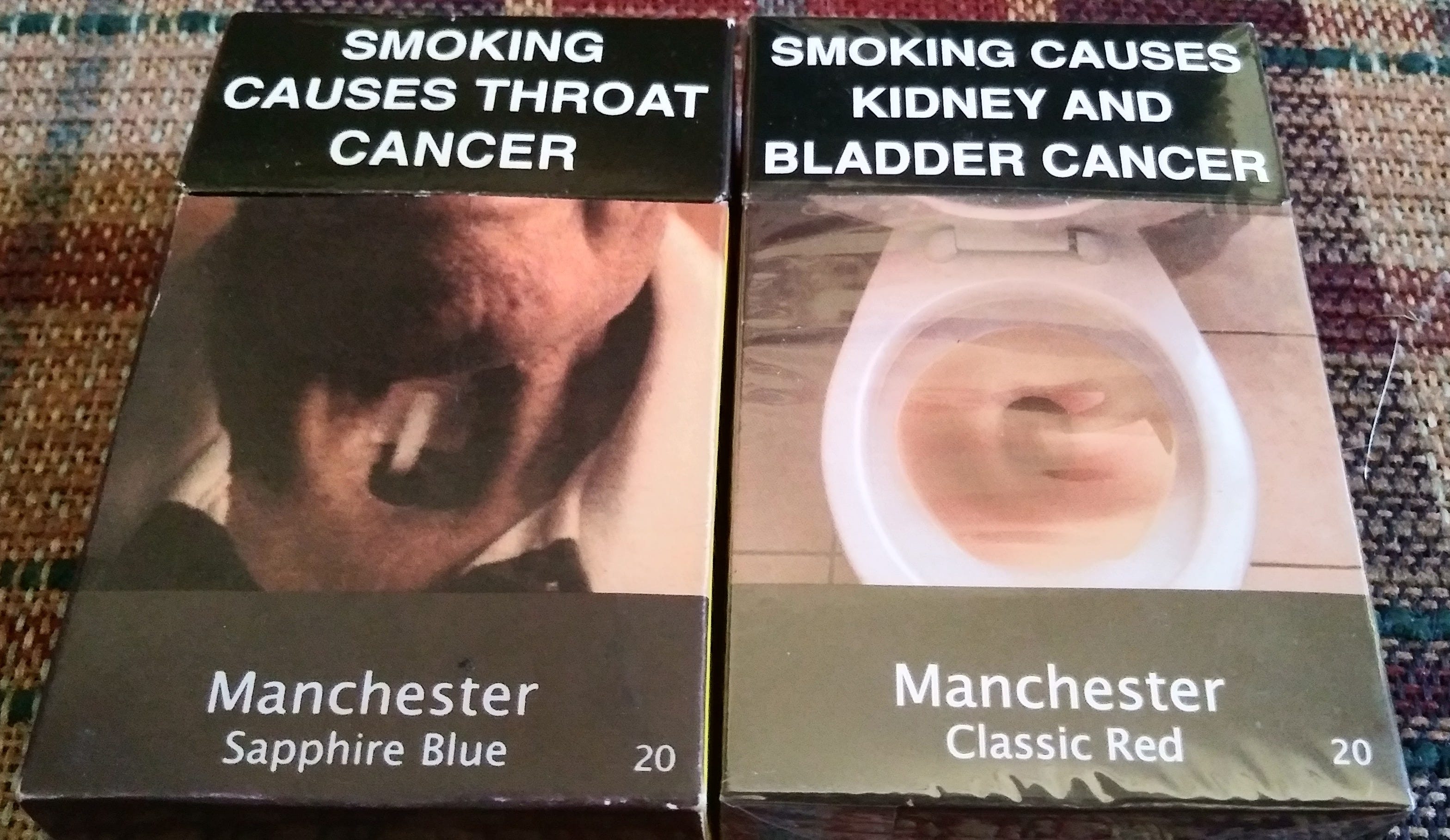
Sources in the UAE - where Manchester is manufactured - told Unintended Consequences last year that reskinned Manchester variants compliant with local packaging restrictions are available to purchasers of the brand. UC has seen versions compliant with Hong Kong packaging rules, UAE skinned Manchester, and plain pack Manchester that met the previous iteration of Australia’s labelling laws.
Those earlier plain pack versions also listed Quay Tobacco Trading as the importer on the packaging, and their barcodes were similarly also registered by the company.
Unintended Consequences asserts no wrongdoing by Quay Tobacco Trading or any of its representatives. It is entirely possible that Quay Tobacco Trading paid for the redesign to make the product compliant. Manufacturers within the Manchester group of companies - research shows there are at least seven of them - may then have reused that compliant template to fulfil export contracts into the Australian black market.
Recent media coverage - including reporting by The Age - has attempted to frame Kaz Hamad as a central figure or “godfather” within Australia’s illicit tobacco market. This discovery further complicates that narrative. The compliant Manchester variant found this week is linked to an Australian based importer with a valid tobacco import permit, not to any individual alleged in recent media speculation.
Hamad is currently detained in Iraq, making it difficult to reconcile claims that he is directing or overseeing the evolution of Australia’s illicit cigarette supply. The evidence instead points to a market shaped by multiple operators, supply chains and manufacturers, rather than a single dominant figure.
The discovery of this next generation variant may also be indicative of something even more concerning. Recent fieldwork discovered what appeared to be fully compliant legitimate Australian stock on the secondary market. UC also found evidence of more compliant stock on the black market - this time nearly nine hundred miles away in remote North Queensland.
I concluded that counterfeiting was the least likely scenario, as I knew of no counterfeiting outfit that would have bothered to engineer products to Australia’s new packaging standards.
This discovery challenges that assumption. Industrial scale counterfeiting of legitimate Australian brands is now a plausible scenario. This chameleon version of Manchester would be extremely difficult to detect once it enters the Australian retail stream. The possibility that large volumes of legitimate brands - such as Winfield or Bond Street - are being counterfeited to this level should be of significant concern to Australian authorities.